⏱ 2 min read
Jelly gel: the candy and stained-glass effect
A translucent tinted gel that lets the layers beneath show through. How many coats to apply and which base to choose for a perfect jelly effect.
The essentials in 30 seconds
- Jelly gel is a translucent color, like a hard candy or stained glass.
- 1. Prep and base as usual (see the guide).
- 2. Choose the background: leave the nail bare (very natural look), apply a nude or milky white (candy effect), or black (dark stained-glass effect).
- 3. Apply a first thin coat of jelly, nice and even.
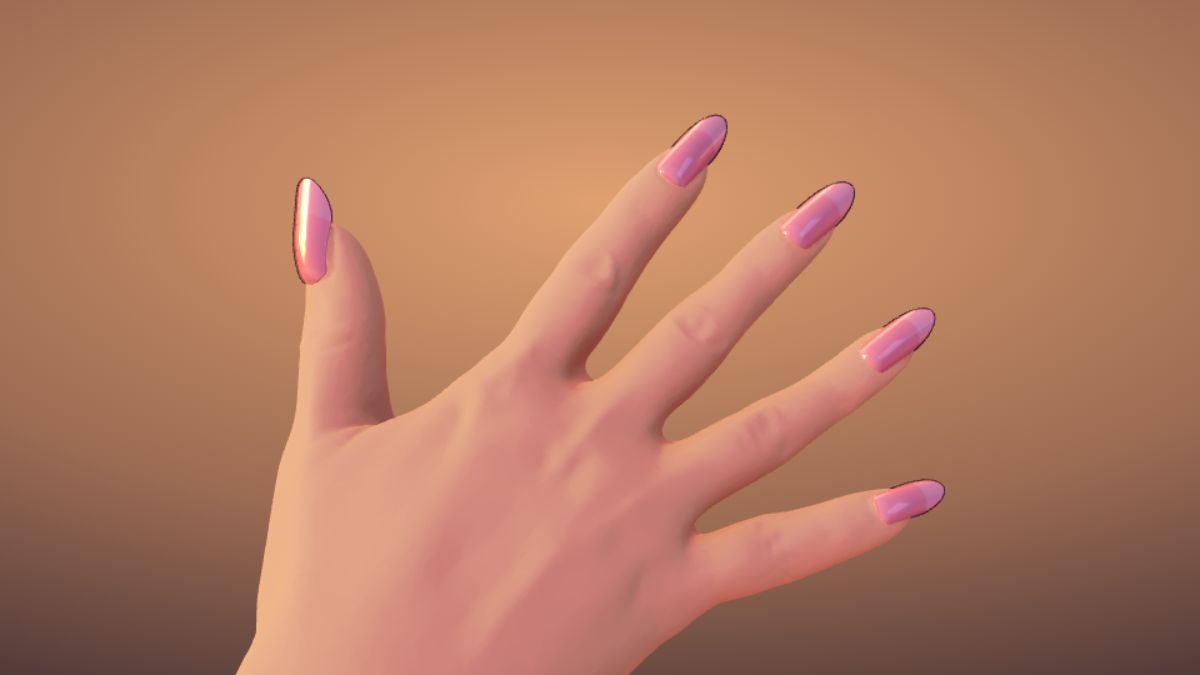
Jelly gel is a translucent color, like a hard candy or stained glass. Unlike a classic base color, it doesn't cover: you can see through it. That's exactly what makes it charming… and what makes it a little different to apply.
How jelly works
A coat of jelly adds a tint but lets light through. So the result depends on two things:
- what's underneath: over white or nude, the color stays light and bright; over black, it becomes deep and dark, almost gem-like;
- the number of coats: each coat intensifies the tint. One coat gives a light veil, three coats a dense color that still glows from within.
Step by step
- Prep and base as usual (see the guide).
- Choose the background: leave the nail bare (very natural look), apply a nude or milky white (candy effect), or black (dark stained-glass effect).
- Apply a first thin coat of jelly, nice and even. Unevenness shows more than with an opaque polish: a thicker area will look darker.
- Cure: 30 s.
- Repeat until you reach the intensity you want.
- Glossy top coat: that's what gives the “glass” effect.
Pro tips
- Easy gradient: apply the second coat only on the half of the nail towards the tip; the color deepens naturally in a gradient.
- Depth effect: slip glitter or a fine design between two coats of jelly; they seem to float in the color.
- Watercolor: over a white base, dab two jelly colors without fully blending them.
Common mistakes
| Problem | Cause | Fix |
|---|---|---|
| Patchy, uneven color | Uneven coat thickness | Thinner, well-spread coats |
| Tint too pale | Not enough coats | Add a coat, not a thicker one |
| Dull effect | Matte or no top coat | Glossy top coat |
| Visible bubbles | Overloaded brush or shaken gel | Let the bottle rest, wipe the brush |
In the 3D studio, the “Jelly” category offers several shades: stack them over different background colors to see the transparency effect instantly.
Jelly gel: the candy and stained-glass effect
Try it in the 3D studio